
14. Updating the Operating System
When systems don't evolve to meet the needs of their environment, they crash.

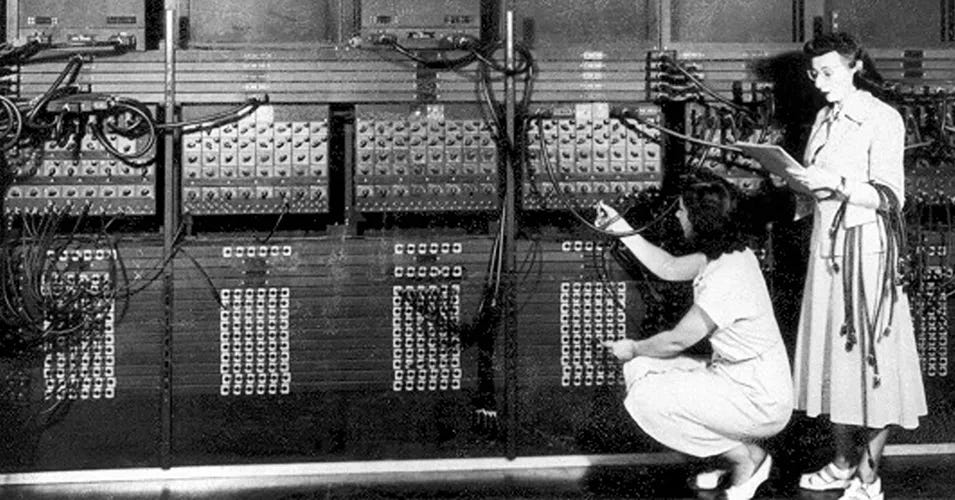
The economy is the operating system of society. It’s the backbone - the platform everything is built on. Like any operating system, it needs to evolve as the hardware and software changes. Looking around today, it’s clear that our economic system has not effectively adapted to the changing needs and opportunities of society. It’s inefficient and crashing regularly. To know how to fix it, we need to better understand how we got here. This is a story about looking backward to find a path forward.
When I was working in government during the Great Recession, helping people who had lost their jobs find lifelines through our programs, it felt like being at war. We were constantly under a metaphorical attack with economic casualties mounting, fighting to save livelihoods from destruction. And I kept asking myself, who am I at war with? Who is the enemy causing all of this destruction? Unlike a traditional war, there was no obvious front. Harm was coming from all sides, but it was unclear where it was rooted. At first I looked at the business world - executives and corporations. It seemed like the obvious answer. I didn’t really want to think of business as the enemy, but I couldn’t deny the tactical realities. If they weren’t laying off thousands of people a day, my phone wouldn’t be ringing.
But even then I could see it wasn’t that simple. Many of those in the business world were also trapped by the conditions they were operating in, watching their balance sheets evaporate as the banking system collapsed and feeling deeply affected by the negative impact they were having on their former employees' lives. The deeper I looked, the more I could see that the policies and culture underpinning the economic system had skewed so far in favour of profit over society that it was devouring us to protect itself.
This disfigured form of capitalism was the enemy on the other side of the line. I had always thought of myself as pro-capitalism - or at least not anti-capitalist - but watching the needless mass destruction of people's livelihoods unfold, I started to seriously question what we were really doing here.
When you watch things dramatically fall apart, it triggers reflection. You start asking deep questions like, what is the point of all of this? Life, society, humanity - what is our purpose? What are we here to achieve? I asked the same question of capitalism. What was its purpose? In my mind, it had to be more than a “get rich” mindset - the act of acquiring more things for the sake of acquiring more things. Not just because it’s morally vacant, it’s also strategically unachievable. There’s no end state to “rich” - you can always get richer - therefore you can never actually be rich. If I was going to give capitalism the benefit of the doubt that it was a valid, functional system, then I had to find a purpose that made sense. Despite the destruction it was capable of, I also saw it was capable of good. When supporters of capitalism claimed that it had done more to lift people out of poverty over the last hundred years than anything else, enabled more advancements in technology, health and other things, they weren’t wrong.
When I want to better understand the present, I like to go back to the past and read the ideas people had during pivotal moments in history. I look for what was discarded, the path not taken. I came across a book called The Affluent Society that had some interesting answers. It was written by John Kenneth Galbraith in 1958, who was an economics professor at Harvard and an advisor in the Kennedy Administration. He was writing in the post-war period, when the US was entering a period of abundance. The industrial manufacturing sector built to support the war effort had accelerated production capacity dramatically, and America was becoming broadly affluent.
According to Galbraith - and I’m paraphrasing here - the purpose of capitalism was to eliminate scarcity. Free markets, competition, and the ability to generate profit were all incentives to industry to help lift communities out of poverty, and provide what they needed to live comfortable, satisfying and productive lives. It was highly effective at that, and in the post-war period after the manufacturing ramp up to support the war effort, American society had finally hit the tipping point. In terms of production capacity, it was no longer a scarcity-based society, but an affluent one, able to produce enough goods to allow people to meet their needs and live comfortably. Capitalism had, in many ways, succeeded in its purpose.
While the ability to eliminate scarcity now existed, scarcity itself was still alive and well, as the gains generated by this increased capacity were not distributed equitably. The rich were getting richer and the poor were getting poorer, despite an abundance of resources. We were at a crossroads. Galbraith argued that we could recognize we had reached a major milestone in humanity by achieving affluence and pivot this powerful economic system to focus on the next set of problems. Problems like how to distribute all of this affluence in a way that improves everyone's quality of life. That alleviates scarcity when it comes to meeting basic needs, and creates space for the pursuit of things like entrepreneurialism, art, education and community.
Or we could double down with this version of capitalism and watch these inequalities continue to exacerbate. If we stayed the course, not only would the disparity between groups increase, but, because the basic needs of those with wealth had been met, industry would begin to manufacture needs to generate consumerist demand. These were the early days of the advertising industry, which could only exist in an affluent society. We had a tremendous opportunity at this crossroads to recognize the moment we were in and adapt our system.
Unfortunately, that never happened. Five years after publishing The Affluent Society, Kennedy was assassinated and with him died a kind of post-war American optimism that made dreaming of this type of change possible. Seven years after that, the Friedman Doctrine was published on shareholder value, ideology overtook strategy, and the people shaping capitalism never looked back. Today we can see many of Galbraith’s predictions have come true. We are immersed in a world of manipulation designed to generate an internalized sense of scarcity and inadequacy. The richer are even richer, the poor are even poorer, the majority of the population feels empty and riddled with anxiety, and the world is on fire. A path not taken indeed.
The economy isn’t a good system or a bad system, it’s an operating system. It is what’s constantly humming in the background to keep the hardware and software - industry, infrastructure, education, healthcare - running. Like any operating system, it needs to be constantly updated as technology evolves. Apple has produced 30 operating systems since launching the Mac decades ago. How many times have we truly updated the economic system? We’ve all had the experience of using an old computer to try and download a new program, only to have it crash because the operating system can’t handle it. It’s the same with the economy. It constantly crashes because we are trying to run 21st century software on a post-war operating system. And because we’ve built up so much tech debt putting off serious upgrades, small changes are no longer going to fix it.
There is no one simple fix, but there are many economists and thinkers out there today who are asking tough questions about capitalism and putting forth ideas for solutions. Looking at how to reign in profit extraction, loosen the concentration of ownership and increase competition in markets to bring the economic system back in line with the needs of society. The time to fix this is now and the need to act is urgent. We are back at a crossroads, deciding which path to take. Capitalism never needed to become an enemy, but decades of protecting its conventional wisdom and ideological purity has left it on the other side of the frontline. For people struggling and exhausted, dealing with artificial scarcity and man-made precarity while living in a sea of so much affluence - which is the majority of the population - their patience has run out. It’s time to change the system.